.png)
The most common mistake I see in premium positioning is that businesses lead with the price before they have built the case for the value. They raise prices, update their visual identity, and call themselves a premium brand — and then they are surprised when customers negotiate, resist, or leave for a cheaper alternative.
Premium is not a price point. It is a perception. And perception is built by making the gap between your offer and every available alternative so clear, so specific, and so well-evidenced that the price becomes a secondary consideration.
There are three components that every successful premium positioning shares.
Specificity of outcome. Premium brands do not say they deliver better results. They say they deliver a specific result — in a specific time frame, for a specific type of client — and they have the evidence to back it up. Vague claims of excellence are the language of commodity providers pretending to be premium.
Deliberate exclusion. Premium brands do not serve everyone. They are explicit about who they are for and, implicitly, who they are not for. That exclusion is not arrogance — it is clarity. It signals to the right clients that this brand understands them specifically, and to everyone else that this is not their brand.
Consistent experience at every touchpoint. Premium is not in the logo or the price list. It is in the quality of the first email, the structure of the first meeting, the clarity of the proposal, the speed of the response, the detail of the follow-up. Every touchpoint either reinforces or undermines the positioning.
The positioning statement I see most often in the Gulf region, across industries, is some variation of: "We deliver quality service with a personal touch."
This statement positions a business as precisely identical to every one of its competitors — because every competitor says the same thing. It is not a position. It is an absence of one. And in a market where customers have genuine alternatives, the absence of a clear position is a very expensive ambiguity.
I work with a small number of founders and CEOs each quarter — people who are done with surface-level advice and ready to commit to a strategy that actually gets built.
.jpg)
Yes. While my primary market is the Gulf region, I have worked across four countries and continue to take international engagements. The JK Framework is designed to work across markets — with adjustments for local context where relevant. If you are outside the UAE, reach out and we can discuss whether the engagement makes sense for your situation.
A small number — deliberately. I do not scale my consulting practice by adding more clients. I scale it by going deeper with fewer. At any given time I am working with a handful of founders and CEOs at the Full Engagement level. This ensures every client gets the full version of me — not a diluted version spread across too many engagements at once.
Growth-stage businesses and scaling companies — typically with revenue between $ 1 Million and above, or startups that have found product-market fit and are ready to build the commercial engine. I also work with larger organisations through my assessment and advisory work. If you are not sure whether your business is the right fit, send me a message and I will be honest with you.
Both. The Strategy Sprint is a fixed-scope, fixed-timeline project. The Full Engagement begins as a defined project through Stages 01 to 04 and then transitions to a quarterly retainer for the Evolve stage. The structure is designed to give you certainty at the beginning and flexibility as the engagement matures.
Three ways. First — I diagnose using an EFQM-informed methodology that most consultancies do not have access to. Second — I stay in the room through execution, which most consultancies do not do. Third — every framework I recommend is one I have tested on my own businesses. I eat what I cook. A consultancy sells frameworks built by others. I sell frameworks built by experience and success stories with real impact in growth.
Yes. Strategic Compass is the consulting firm through which all formal engagements are conducted. Visiting strategicompass.com gives you the full picture of available services, engagement structures, and how to apply for an engagement. Both this site and Strategic Compass lead to the same conversations — they are different entry points for the same work.
Most strategies never reach the revenue. Let's close the gap between your plan and your growth.
Whether you need a quick diagnostic or a full transformation, there's a path that fits.
.jpg)
A focused two-to-three week engagement - diagnose the core challenge and deliver a clear strategic direction. No fluff. No endless discovery. Just the answer you need to move.

The full five-stage journey — Diagnose, Architect, Align, Execute, Evolve. I stay in the room through execution. This is where the deepest transformation happens.

Not motivational keynotes — practical frameworks that audiences can use the very next morning. Available for conferences, executive offsites, and MBA programmes.
.png)
"He doesn't just craft messages — he builds narratives that resonate deeply with customers and stakeholders alike. His strategic insights have consistently helped organisations scale profitably and sustainably, even in highly competitive markets."
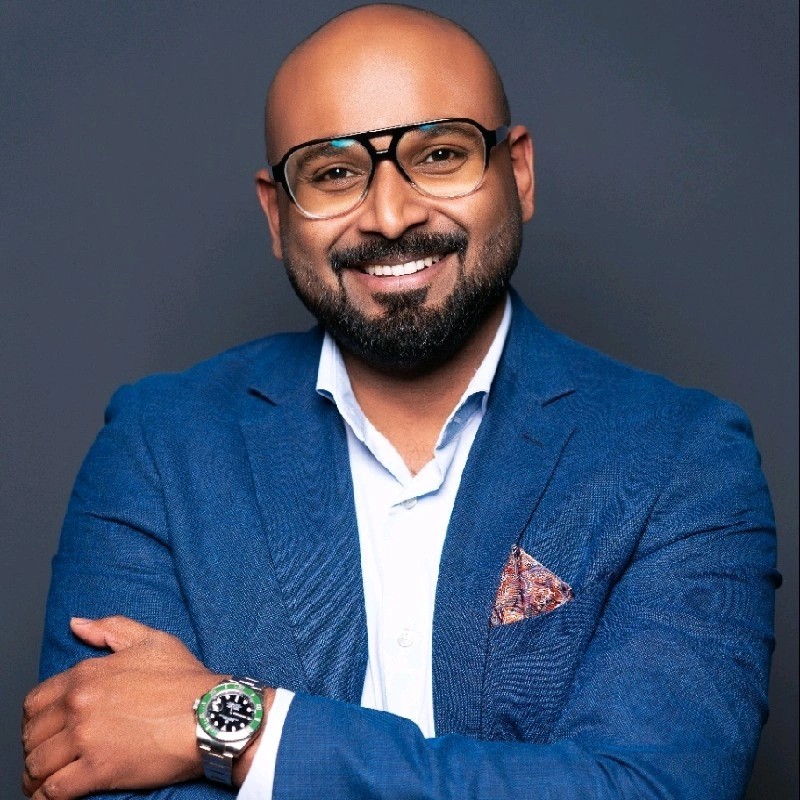

"What began as a professional engagement soon evolved into a strong friendship and partnership. Jamal's strategic thinking and genuine commitment have made him an invaluable part of our journey."