
.png)
On paper, Vasanta Bhavan had everything working against it.
A vegetarian restaurant in a part of London where the market was not particularly demanding of vegetarian food. Low footfall. Inconsistent quality. Staff who had different ideas about what the standard was. No system for anything — ordering, service, kitchen operations, or customer experience. The owner was running it with good intentions and genuine commitment, but no operating architecture that could make those intentions repeatable.
I did not arrive with a mandate to turn it around. I arrived as someone who finished his day at Imagination Technologies and needed something to do with the next four hours. What followed became the first real proof of concept for what I now call the JK Strategic Consulting Framework — though I would not have named it that at the time.
The first thing I did was nothing. For the first week, I watched.
I watched how orders were taken. How food moved from the kitchen to the table. How staff interacted with customers. How the kitchen managed its inventory. How complaints were handled — or not handled. How the end of service was conducted. What happened between the lunch rush and the dinner service.
What I found was not a sales problem. It was not a menu problem. It was not even a staffing problem in the conventional sense.
It was a systems problem.
There was no standard. Every member of staff had a slightly different idea of how things should be done — how tables should be set, how orders should be taken, how complaints should be handled, how food should be presented. When standards are implicit, they become personal. When standards are personal, consistency is impossible. When consistency is impossible, trust erodes. When trust erodes, customers stop coming back.
The revenue problem was a symptom. The absent system was the cause.
Over the following weeks I built the operating architecture that the business needed — not by importing a template from somewhere else, but by documenting what the best version of the existing operation looked like and making it the standard for everyone.
How every table should be set. How every order should be taken. How every complaint should be acknowledged and resolved. How the kitchen should communicate with the front of house. How the end of service should be conducted. How inventory should be managed to reduce waste.
None of this was complicated. None of it required investment. All of it required discipline — and the willingness to hold the standard even when it was inconvenient.
The system was not imposed. It was built with the staff, explained with the rationale, and held consistently from the first day it was implemented.
Within thirty days, the consistency of service had visibly improved. Within sixty days, repeat customers were returning. Within ninety days, the business was profitable — not spectacularly, but genuinely, sustainably profitable.
And then I stopped going.
That was the real test. Not whether the business performed when I was there. Whether it performed when I was not. The system I had built was not dependent on my presence. It ran because the people who worked there understood it, owned it, and held each other to it.
That is the standard I use for every engagement. Not whether the strategy works with the consultant in the room. Whether it works when they leave.
Vasanta Bhavan was a restaurant. But the lessons it produced are relevant to every business I have worked with since.
Most business problems are not the problems they appear to be. The presented problem — in this case, low sales — was real but secondary. The root cause — absent operating standards — was invisible until someone took the time to look properly.
Systems beat intentions every time. The owner of Vasanta Bhavan had good intentions. He worked hard. He cared about the business. None of that was enough to produce consistent results because there was no system to make his intentions repeatable.
The best consultants leave something that runs without them. If the turnaround only works while the consultant is present, the turnaround has not happened. A genuine intervention produces a system, a capability, or a decision that the organisation can sustain independently.
Four hours a night. Ninety days. Profitable. Running without me.
That is still the standard I hold myself to.
I work with a small number of founders and CEOs each quarter — people who are done with surface-level advice and ready to commit to a strategy that actually gets built.
.jpg)
Yes. While my primary market is the Gulf region, I have worked across four countries and continue to take international engagements. The JK Framework is designed to work across markets — with adjustments for local context where relevant. If you are outside the UAE, reach out and we can discuss whether the engagement makes sense for your situation.
A small number — deliberately. I do not scale my consulting practice by adding more clients. I scale it by going deeper with fewer. At any given time I am working with a handful of founders and CEOs at the Full Engagement level. This ensures every client gets the full version of me — not a diluted version spread across too many engagements at once.
Growth-stage businesses and scaling companies — typically with revenue between $ 1 Million and above, or startups that have found product-market fit and are ready to build the commercial engine. I also work with larger organisations through my assessment and advisory work. If you are not sure whether your business is the right fit, send me a message and I will be honest with you.
Both. The Strategy Sprint is a fixed-scope, fixed-timeline project. The Full Engagement begins as a defined project through Stages 01 to 04 and then transitions to a quarterly retainer for the Evolve stage. The structure is designed to give you certainty at the beginning and flexibility as the engagement matures.
Three ways. First — I diagnose using an EFQM-informed methodology that most consultancies do not have access to. Second — I stay in the room through execution, which most consultancies do not do. Third — every framework I recommend is one I have tested on my own businesses. I eat what I cook. A consultancy sells frameworks built by others. I sell frameworks built by experience and success stories with real impact in growth.
Yes. Strategic Compass is the consulting firm through which all formal engagements are conducted. Visiting strategicompass.com gives you the full picture of available services, engagement structures, and how to apply for an engagement. Both this site and Strategic Compass lead to the same conversations — they are different entry points for the same work.
Most strategies never reach the revenue. Let's close the gap between your plan and your growth.
Whether you need a quick diagnostic or a full transformation, there's a path that fits.
.jpg)
A focused two-to-three week engagement - diagnose the core challenge and deliver a clear strategic direction. No fluff. No endless discovery. Just the answer you need to move.

The full five-stage journey — Diagnose, Architect, Align, Execute, Evolve. I stay in the room through execution. This is where the deepest transformation happens.

Not motivational keynotes — practical frameworks that audiences can use the very next morning. Available for conferences, executive offsites, and MBA programmes.
.png)
"He doesn't just craft messages — he builds narratives that resonate deeply with customers and stakeholders alike. His strategic insights have consistently helped organisations scale profitably and sustainably, even in highly competitive markets."
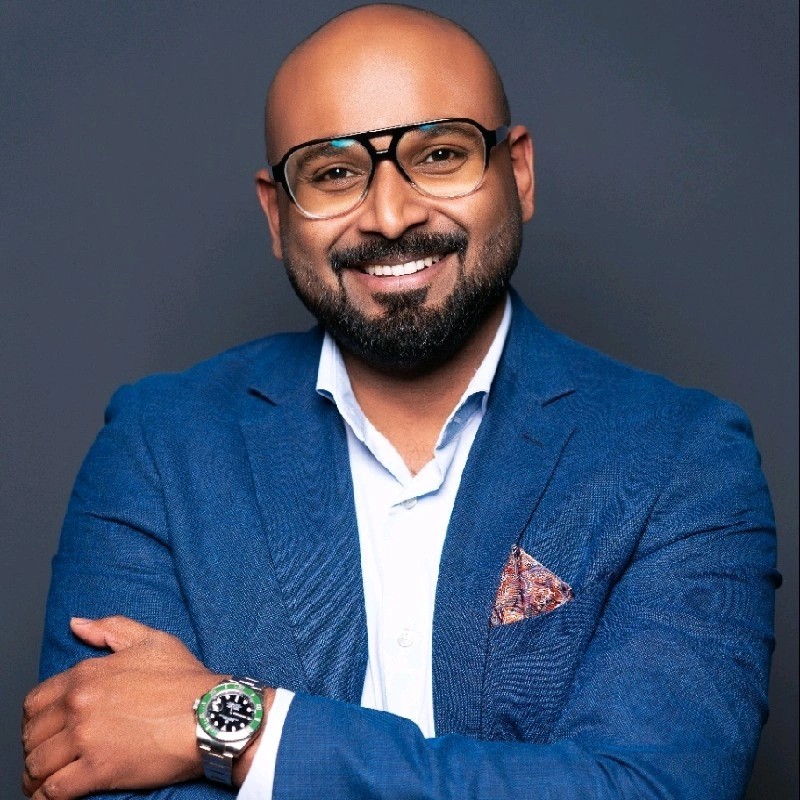

"What began as a professional engagement soon evolved into a strong friendship and partnership. Jamal's strategic thinking and genuine commitment have made him an invaluable part of our journey."